The best marathon recovery tools target the three things long-distance runners have to tend to most often: heavy legs, fluid buildup, and turnaround time between runs. A simple, effective recipe is three modalities: dynamic compression to flush the legs, an infrared sauna session to ease soreness and support circulation, and red light therapy to support tissue repair. Do compression on long-run days, sauna on easier or rest days, and red light two to three times a week. City Fitness Revive members can get it all in one place.
If you have been following along with our recovery series this month, you have the recovery ingredients. Here is the recovery recipe…
What marathon runners recover from
A long run is tens of thousands of low-load impacts, and it leaves behind fluid pooling in the lower legs, connective tissue that has absorbed a lot of repeated loading, and systemic fatigue that makes the next session feel harder than it should.
Your recovery priorities, then, are circulation, soreness management, and tissue repair.
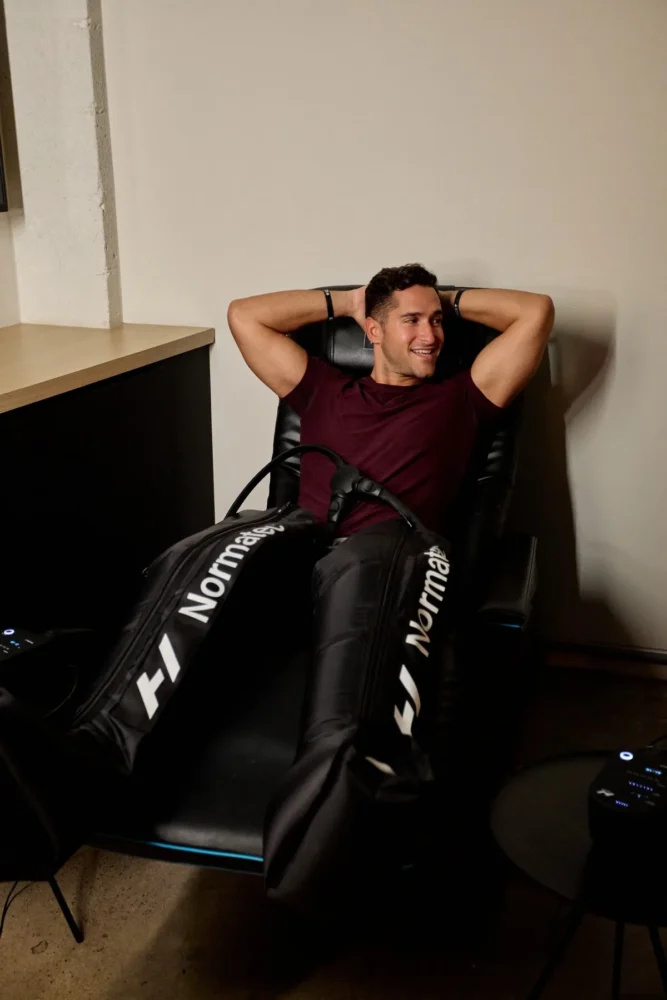
Step 1: Compression, to flush the legs
Use it: after long runs and hard workouts. 20 to 30 minutes.
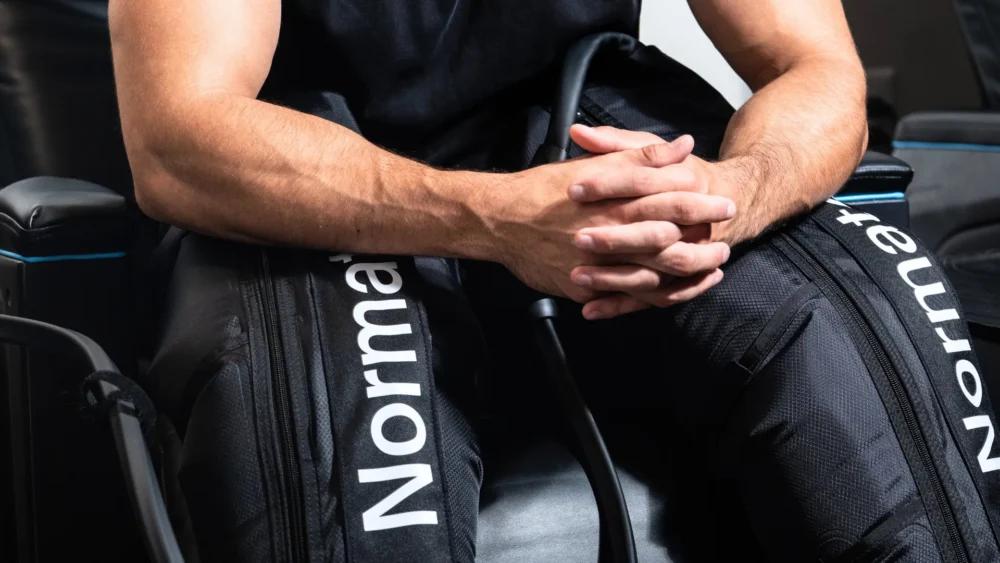
Compression boots inflate in sequence from the foot upward, and a 2024 meta-analysis of 17 trials found reduced muscle soreness, measured both in the hours after training and again several days later.
Most runners notice it as less of that heavy-legged feeling the morning after a long run. If you only do one thing from this list, do this one, and use it on the day of your long run rather than the day after.
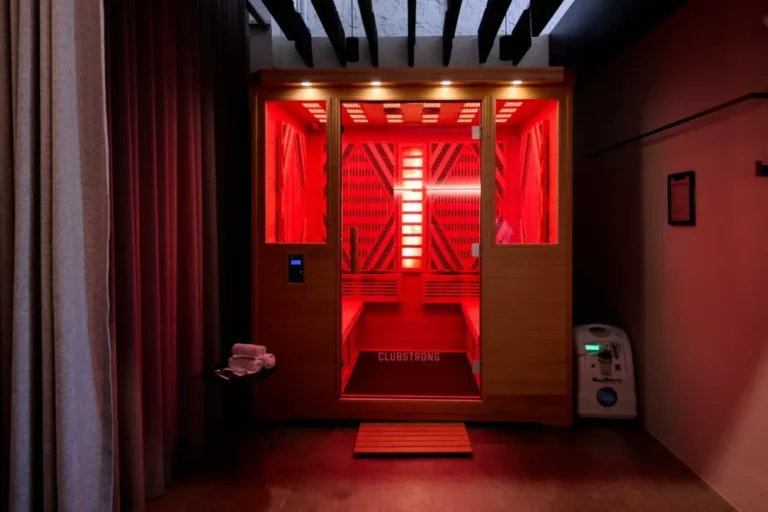
Step 2: Infrared sauna, for soreness and circulation
Use it: easy days and rest days. 15 to 20 minutes.
Heat reduces soreness pain, with a meta-analysis of 32 randomized trials supporting the effect within 24 hours and beyond. Plus, regular sauna users see benefits in terms of stress relief. Even better: bring a friend and ditch the phone for those 20 minutes.
Put this on an easy day rather than immediately after your hardest session, mostly for practical reasons. You are already dehydrated and depleted after a long run, and adding significant heat stress on top is not the best. Rehydrate first, sauna later, or the following day.
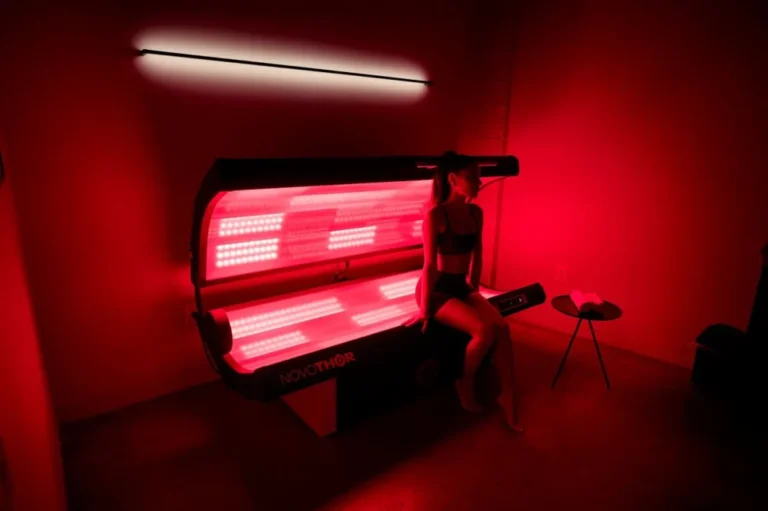
Step 3: Red light, for tissue repair
Use it: two to three times a week, any day. 10 to 20 minutes.
Red light therapy supports cellular repair, reduces soreness, and shortens how long strength stays depressed after hard work.
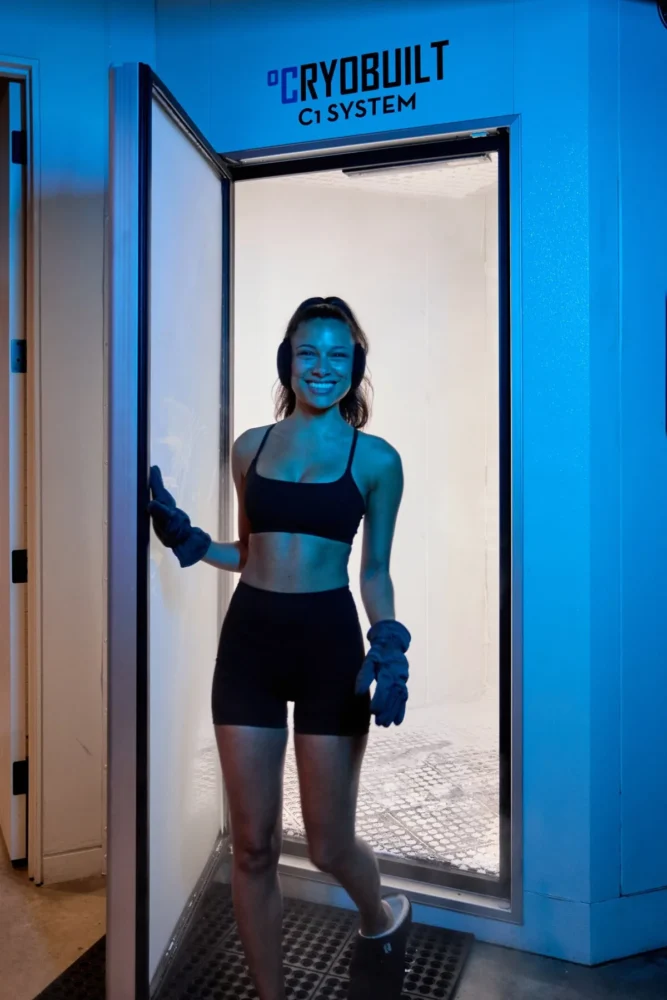
Where cold fits for runners
Cryotherapy can also be a great tool during a heavy training block when the priority is quick turnaround to your next training session AND in the days right after a race.
Keep the core routine to whatever is manageable, though. Compression, heat, and red light cover circulation, soreness, and repair between them, and a simple routine you follow beats a complicated one you abandon in week two.
Race week
Race week is the wrong time to introduce anything unfamiliar. Focus on: Compression after your last meaningful run and sauna early in the week rather than the day before the race since it’ll dehydrate you.
After the race, give yourself a day, then compression, then whatever feels good.
FAQ
What are the best recovery tools for marathon runners?
Compression boots, heat, and red light therapy cover the three things runners need: circulation, soreness relief, and tissue repair. Compression is the most runner-specific of the three.
Should runners use compression boots?
Yes, particularly after long runs. A 2024 meta-analysis of 17 trials found reduced muscle soreness, and most runners notice less heaviness in the legs the next morning.
Is an infrared sauna good for runners?
Yes, for soreness and relaxation. Use it on easy or rest days rather than immediately after a long run, when you are already dehydrated.
How should runners recover after a long run?
Rehydrate and eat first, then compression for 20 to 30 minutes. Save heat for later that day or the next.
Can runners use cold therapy or cryotherapy?
Yes, especially during heavy training blocks and after races.
About this series: This article is part of the City Fitness Revive recovery series and is for educational purposes only. It is not medical advice and does not create a clinician-patient relationship. Revive services are not intended to diagnose, treat, cure, or prevent any disease or medical condition. Talk with your doctor or another qualified clinician before starting or changing a recovery routine, especially if you are pregnant, have any health condition, or take any medication.
Recovery treatments are not right for everyone. Heat, extreme cold, compression, percussion, supplemental oxygen, and light therapy can be unsafe for people with certain conditions. These include heart disease or high, low, or unstable blood pressure; blood clots, a history of DVT, or circulation problems such as Raynaud’s; respiratory conditions; conditions that reduce your ability to sense heat, cold, or pain, such as neuropathy; sensitivity to light or heat, or a medication that causes it; a history of skin cancer or an active skin lesion; use of blood thinners or a bleeding disorder; and open wounds, skin infections, illness, or a recent injury or surgery. If any of these apply to you, get your doctor’s approval first. Do not use Revive services after drinking alcohol or while dehydrated. Stop any session right away if you feel pain, dizziness, numbness, tingling, or otherwise unwell. Always follow posted instructions and Team Member guidance, including the required protective gear and eye protection.
Research described in this series summarizes average findings from published studies. Individual experiences vary, and session lengths and frequencies are general guidelines, not personal recommendations.
Sources
- Maia, F., Nakamura, F., Sarmento, H., Marcelino, R., & Ribeiro, J. (2024). Effects of lower-limb intermittent pneumatic compression on sports recovery: a systematic review and meta-analysis. Biology of Sport, 41(4), 263-275. doi.org/10.5114/biolsport.2024.133665
- Wang, Y., Li, S., Zhang, Y., Chen, Y., Yan, F., Han, L., & Ma, Y. (2021). Heat and cold therapy reduce pain in patients with delayed onset muscle soreness: a systematic review and meta-analysis of 32 randomized controlled trials. Physical Therapy in Sport, 48, 177-187. doi.org/10.1016/j.ptsp.2021.01.004
- Leal-Junior, E. C. P., Vanin, A. A., et al. (2015). Effect of phototherapy (low-level laser therapy and light-emitting diode therapy) on exercise performance and markers of exercise recovery: a systematic review with meta-analysis. Lasers in Medical Science, 30, 925-939. doi.org/10.1007/s10103-013-1465-4