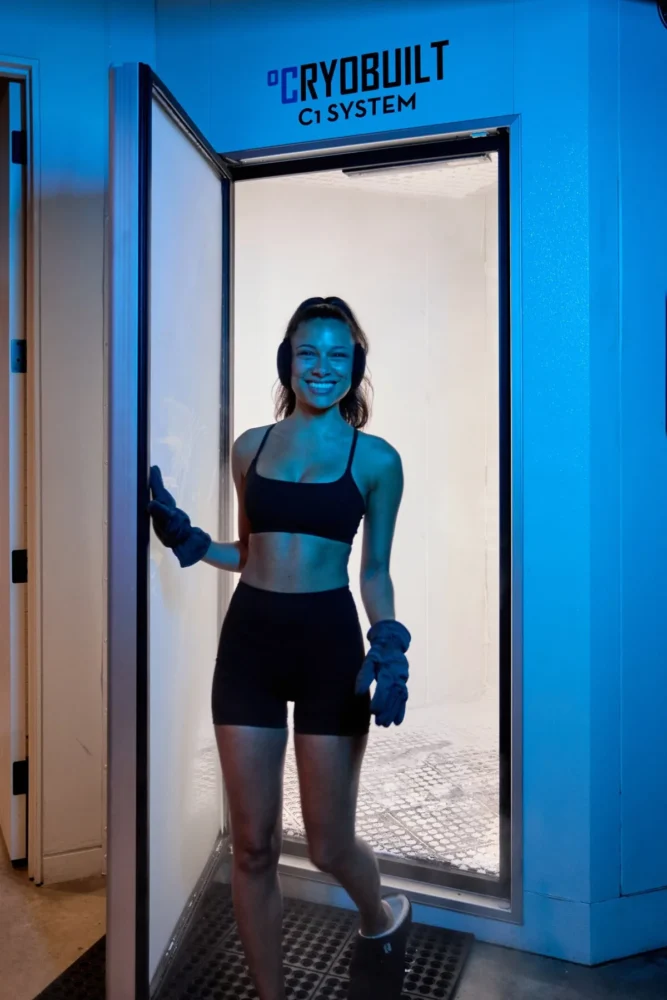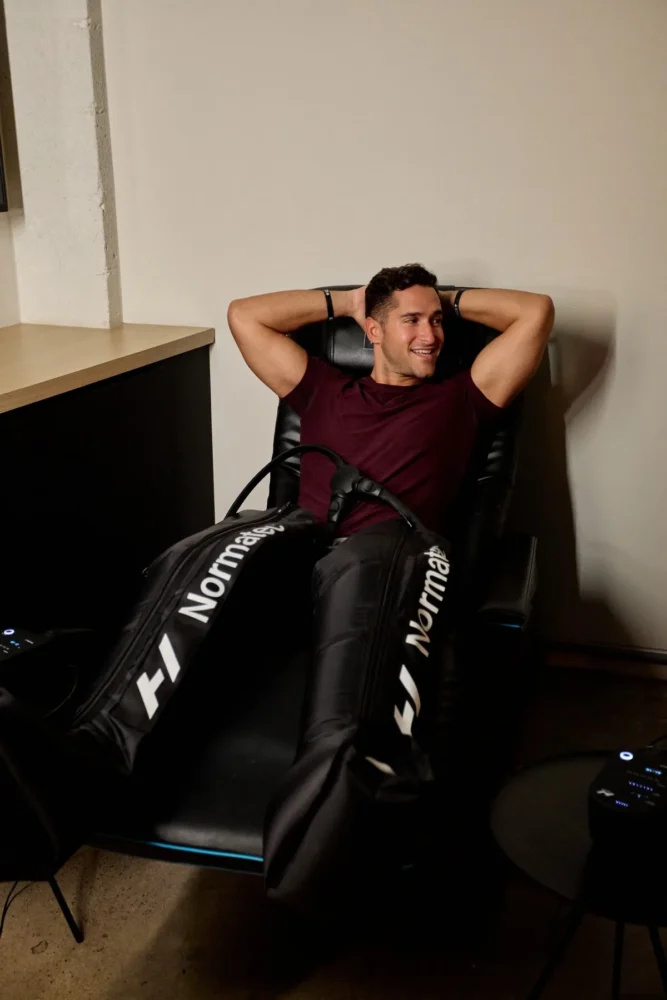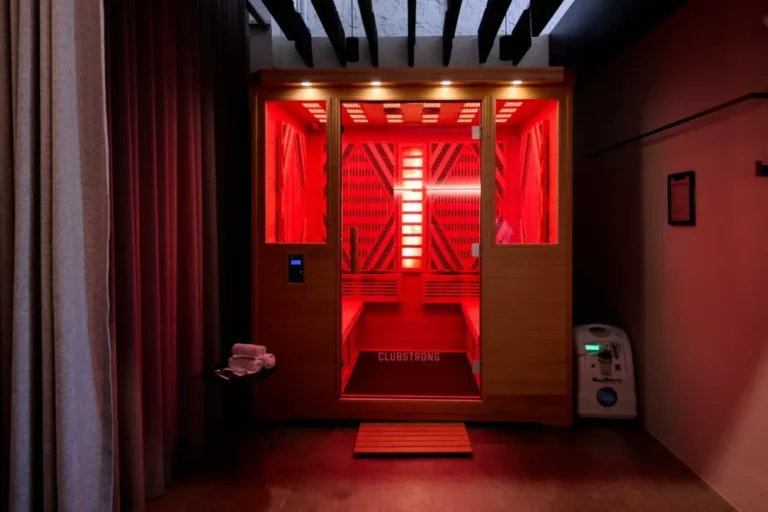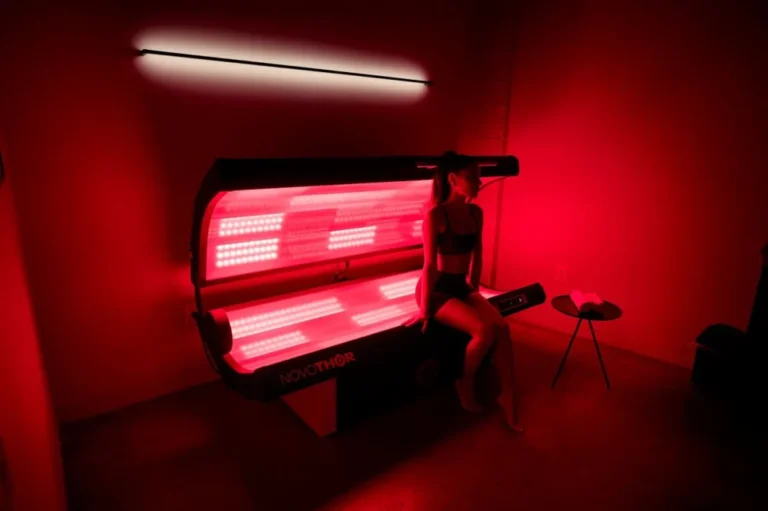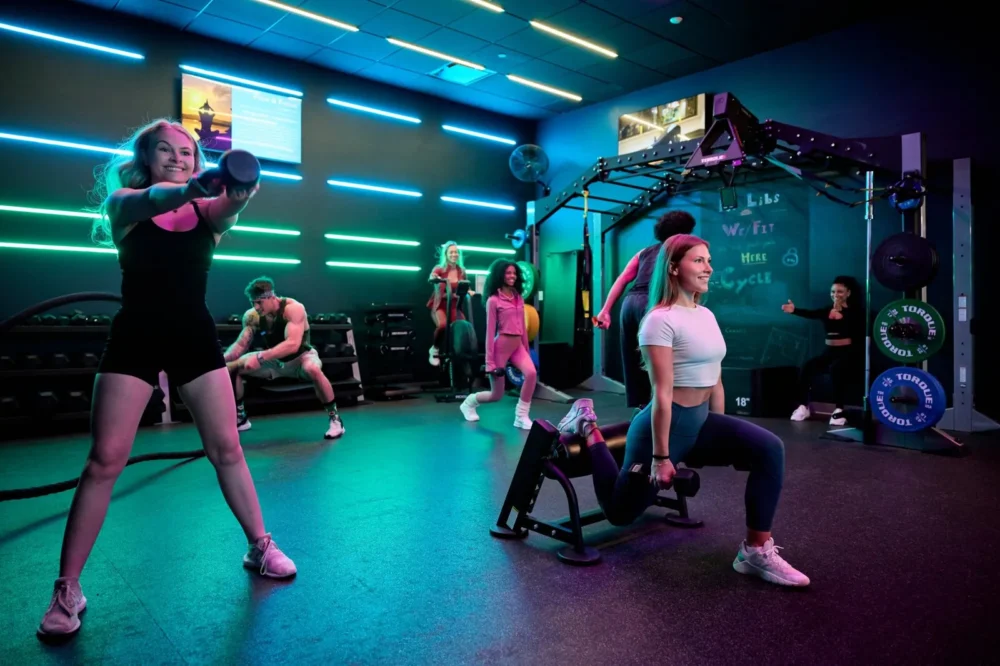
For heavy lifting and functional fitness, the goal is to recover without working against the muscle you trained for. The practical recipe is red light therapy and infrared sauna to support repair and ease soreness, plus compression to reduce fatigue between training sessions. Cold water immersion within about 15 minutes of lifting has been shown to modestly reduce muscle growth, so if size is your priority, use cold on rest days instead. City Fitness Revive members can get it all in one place.
If you have been following the series, you have the recovery ingredients. Here is how they fit together for someone who lifts heavy.
The recovery problem specific to weightlifting
Hard resistance training creates microscopic muscle damage, and the repair response to that damage is the adaptation you trained for.
The inflammation you feel afterward is part of the signal telling your body to build, so attacking soreness with every tool available can (sometimes) work against the session you just did.
The aim is to feel better and recover faster while leaving that signal intact.
Step 1: Red light to repair without interference
Use it: two to three times a week. 10 to 20 minutes.
Red light therapy supports cellular repair, reduces soreness, and shortens how long strength stays depressed after a hard session. Comparative research has found photobiomodulation performs as well as or better than cold therapy on several recovery markers.
Step 2: Infrared sauna for soreness relief
Use it: after training or on rest days. 15 to 20 minutes.
Unlike some cold therapy, a six-week trial of post-exercise infrared sauna found no sign of impaired hypertrophy or strength adaptation. For feeling markedly better after a heavy session, the sauna is the one to book.
Step 3: Compression to reduce fatigue between sessions
Use it: after high-volume lower body work. 20 to 30 minutes.
Compression is the fatigue tool in this routine, and on the day after a heavy squat session, taking the heaviness out of your legs is what lets you train well again sooner. The meta-analysis evidence supports reduced soreness in the hours after training and again days later.
Where cold fits: time it right
What the research shows. A 2024 systematic review and meta-analysis of cold water immersion after resistance training found a modest negative effect on muscle growth when cold was applied within roughly 15 minutes of lifting. But: the effect was small, the quality of the underlying studies was varied, and the finding applies specifically to cold water immersion within that short window (different than cryotherapy). Several studies found strength unaffected even where muscle size was.
The practical rule. If maximizing muscle size is your main goal, consider not going straight from the rack into cold exposure. Use cold on rest days or non-lifting days instead. If your goals are mixed, or you are managing fatigue, cold therapy is your friend.
You might see “wait 4-6 hours” repeated widely, but there’s not much research to back this up. Either don’t worry about the timing (City Fitness Revive has dry cryo chambers, not wet cold plunges, after all), or do cold on rest days if you want a conservative approach. In the meantime, plenty of other modalities, heat or otherwise, to explore!
A weekly layout
Heavy lower body day: compression after. Sauna after that.
Upper body or accessory day: red light, any time.
Rest day: cryotherapy if you want cold, plus sauna.
Throughout: red light two to three times a week, whenever it fits.
Who should be cautious
The precautions for each modality in this routine are covered in the individual posts linked below. If you are pregnant, have cardiovascular disease or unstable blood pressure, a condition affecting circulation or temperature sensation, or take a photosensitizing medication, talk to your doctor before starting any of these.
FAQ
What’s the best recovery for weightlifting?
Red light therapy, infrared sauna, and compression cover repair, soreness, and fatigue. Cold is useful too, especially dry cryotherapy.
Does cold therapy reduce muscle growth?
A 2024 meta-analysis found cold water immersion within about 15 minutes of resistance training had a modest negative effect on muscle growth. The effect was small and the authors cautioned against extending the finding to other cold methods such as whole-body cryotherapy.
Can you use an infrared sauna after lifting?
Yes. This can help with muscle recovery, fatigue, and even mood, stress, and sleep.
When should lifters use cold therapy?
On rest days, during deload weeks, and when managing fatigue, where feeling recovered matters more than maximizing hypertrophy from any single session.
About this series: This article is part of the City Fitness Revive recovery series and is for educational purposes only. It is not medical advice and does not create a clinician-patient relationship. Revive services are not intended to diagnose, treat, cure, or prevent any disease or medical condition. Talk with your doctor or another qualified clinician before starting or changing a recovery routine, especially if you are pregnant, have any health condition, or take any medication.
Recovery treatments are not right for everyone. Heat, extreme cold, compression, percussion, supplemental oxygen, and light therapy can be unsafe for people with certain conditions. These include heart disease or high, low, or unstable blood pressure; blood clots, a history of DVT, or circulation problems such as Raynaud’s; respiratory conditions; conditions that reduce your ability to sense heat, cold, or pain, such as neuropathy; sensitivity to light or heat, or a medication that causes it; a history of skin cancer or an active skin lesion; use of blood thinners or a bleeding disorder; and open wounds, skin infections, illness, or a recent injury or surgery. If any of these apply to you, get your doctor’s approval first. Do not use Revive services after drinking alcohol or while dehydrated. Stop any session right away if you feel pain, dizziness, numbness, tingling, or otherwise unwell. Always follow posted instructions and Team Member guidance, including the required protective gear and eye protection.
Research described in this series summarizes average findings from published studies. Individual experiences vary, and session lengths and frequencies are general guidelines, not personal recommendations.
Sources
- Pinero, A., et al. (2024). Throwing cold water on muscle growth: a systematic review with meta-analysis of the effects of postexercise cold water immersion on resistance training-induced hypertrophy. European Journal of Sport Science. doi.org/10.1002/ejsc.12074
- Haq, A., Ribbans, W. J., Hohenauer, E., & Baross, A. W. (2022). The effect of repetitive whole body cryotherapy treatment on adaptations to a strength and endurance training programme in physically active males. Frontiers in Sports and Active Living. doi.org/10.3389/fspor.2022.834386
- Fyfe, J. J., et al. (2019). Cold water immersion attenuates anabolic signaling and skeletal muscle fiber hypertrophy, but not strength gain, following whole-body resistance training. Journal of Applied Physiology. doi.org/10.1152/japplphysiol.00127.2019
- Roberts, L. A., et al. (2015). Post-exercise cold water immersion attenuates acute anabolic signalling and long-term adaptations in muscle to strength training. The Journal of Physiology. doi.org/10.1113/JP270570
- Ahokas, E. K., Hanstock, H. G., Kyrolainen, H., & Ihalainen, J. K. (2025). Effects of repeated use of post-exercise infrared sauna on neuromuscular performance and muscle hypertrophy. Frontiers in Sports and Active Living, 7, 1462901. doi.org/10.3389/fspor.2025.1462901
- Maia, F., Nakamura, F., Sarmento, H., Marcelino, R., & Ribeiro, J. (2024). Effects of lower-limb intermittent pneumatic compression on sports recovery: a systematic review and meta-analysis. Biology of Sport, 41(4), 263-275. doi.org/10.5114/biolsport.2024.133665