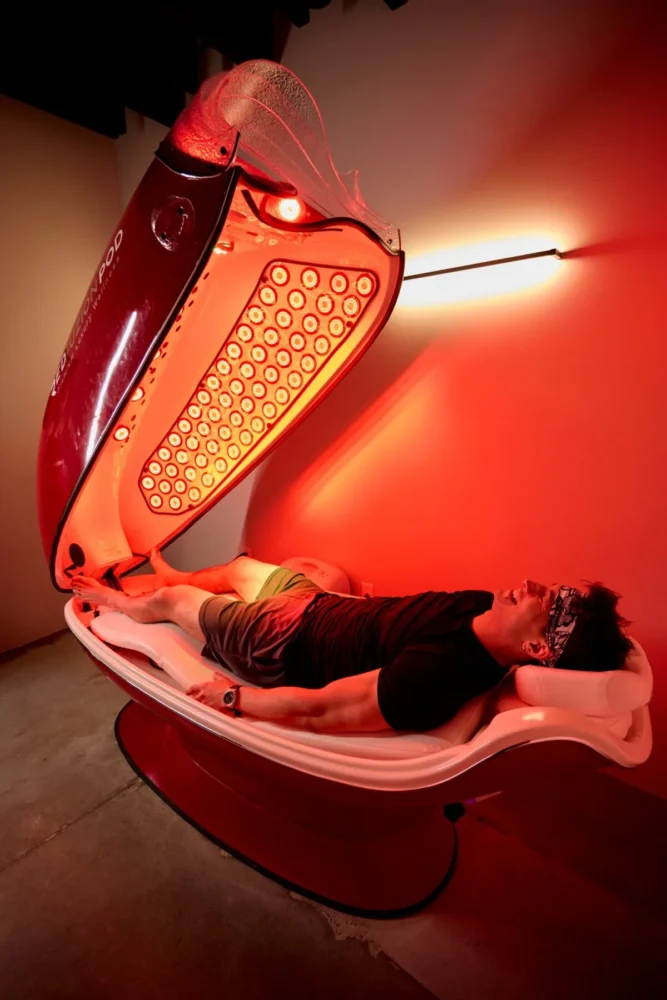
Infrared light therapy uses two wavelength ranges that do different things. Far-infrared works as heat you feel at the skin, which supports circulation, relaxation, and muscle comfort. Near-infrared works through a photochemical effect in the cells rather than by heating you, which supports tissue repair. A device that delivers both covers surface-level relaxation and deeper recovery in one session. At City Fitness Revive, the RedFuzion Pod provides both far and near-infrared in a single session.
One name, two different things
“Infrared” describes a range of wavelengths rather than a single treatment, and the two ends of that range behave very differently…
Far-infrared: surface, warmth, and circulation
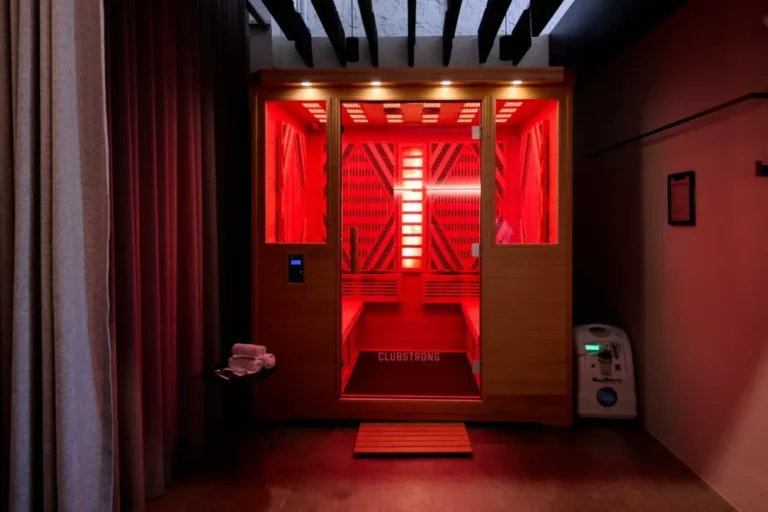
Far-infrared sits at the longer end of the wavelength range. It is absorbed at and just beneath the skin and produces gentle warming. That drives effects like increased local blood flow, muscle relaxation, and the loosened feeling people associate with heat therapy. It is the same part of the spectrum doing the work in an infrared sauna.
What it is good for: circulation, relaxation, and muscle comfort, particularly in areas that feel tight.
Near-infrared: repair
Near-infrared sits at the shorter end, adjacent to visible red light, and its effects are photochemical rather than thermal. It supports the cellular repair processes that matter after a hard training day, and reviews of phototherapy around exercise report less soreness and a faster return of strength in the days afterward.
What it is good for: muscle recovery, joint discomfort, and tissue repair after loading.
Benefits of combined infrared light therapy
Using both wavelengths covers two different problems at once: the surface tightness that responds to warmth and circulation, and the tissue that responds to photochemical repair.
You get the loosened feeling immediately and the recovery support over the following days, without booking two separate things!
Versus an infrared sauna: the sauna is primarily a heat modality that raises your core temperature. A light pod does not heat you systemically in the same way, so it is a gentler option on days when you do not want heat stress or dehydration.
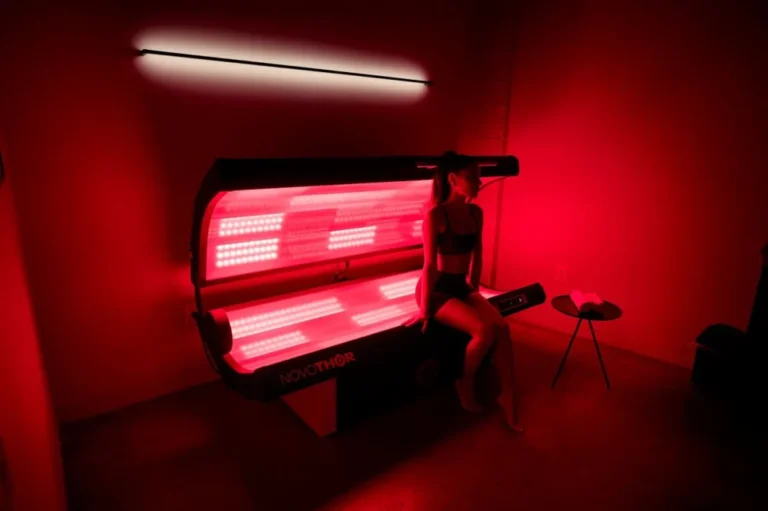
Versus a dedicated red light bed: a full-body red light bed delivers a more concentrated dose in the red and near-infrared range specifically.
How to use it
Fifteen to 20 minutes, two to three times a week. Skin exposure helps, since clothing blocks the wavelengths. As with any light therapy, do not follow it immediately with cold exposure.
Who should be cautious
Talk to your doctor first if you are pregnant, take a photosensitizing medication such as certain antibiotics, acne treatments, or diuretics, or have a condition that makes you sensitive to light or heat. Use the eye protection provided. If you have a history of skin cancer, an active skin lesion, or a condition affecting your ability to sense heat, clear it with a clinician before your first session.
FAQ
What’s the difference between far and near-infrared?
Far-infrared works as heat. It is absorbed at the skin and produces gentle warming that supports circulation, relaxation, and muscle comfort. Near-infrared works through a photochemical effect instead, where light-absorbing components in your cells use the energy to support repair.
What are the benefits of infrared light therapy?
Improved local circulation, muscle relaxation, reduced soreness, and support for tissue repair after training. Use it as a regular part of your recovery week.
Is infrared light therapy the same as red light therapy?
They overlap. Red light therapy uses visible red and near-infrared wavelengths. A combined infrared device adds far-infrared, which contributes surface warming that red light alone does not.
How often should you use an infrared pod?
Two to three sessions a week, 15 to 20 minutes each.
What’s the difference between the RedFuzion Pod and the infrared sauna?
The sauna heats you systemically and raises core temperature. The pod delivers targeted infrared wavelengths without the same whole-body heat load, which makes it a gentler option and easier to use on days you do not want heat stress.
About this series: This article is part of the City Fitness Revive recovery series and is for educational purposes only. It is not medical advice and does not create a clinician-patient relationship. Revive services are not intended to diagnose, treat, cure, or prevent any disease or medical condition. Talk with your doctor or another qualified clinician before starting or changing a recovery routine, especially if you are pregnant, have any health condition, or take any medication.
Recovery treatments are not right for everyone. Heat, extreme cold, compression, percussion, supplemental oxygen, and light therapy can be unsafe for people with certain conditions. These include heart disease or high, low, or unstable blood pressure; blood clots, a history of DVT, or circulation problems such as Raynaud’s; respiratory conditions; conditions that reduce your ability to sense heat, cold, or pain, such as neuropathy; sensitivity to light or heat, or a medication that causes it; a history of skin cancer or an active skin lesion; use of blood thinners or a bleeding disorder; and open wounds, skin infections, illness, or a recent injury or surgery. If any of these apply to you, get your doctor’s approval first. Do not use Revive services after drinking alcohol or while dehydrated. Stop any session right away if you feel pain, dizziness, numbness, tingling, or otherwise unwell. Always follow posted instructions and Team Member guidance, including the required protective gear and eye protection.
Research described in this series summarizes average findings from published studies. Individual experiences vary, and session lengths and frequencies are general guidelines, not personal recommendations.
Sources
- Vatansever, F., & Hamblin, M. R. (2012). Far infrared radiation (FIR): its biological effects and medical applications. Photonics & Lasers in Medicine, 1(4), 255-266. doi.org/10.1515/plm-2012-0034
- Leal-Junior, E. C. P., Vanin, A. A., et al. (2015). Effect of phototherapy (low-level laser therapy and light-emitting diode therapy) on exercise performance and markers of exercise recovery: a systematic review with meta-analysis. Lasers in Medical Science, 30, 925-939. doi.org/10.1007/s10103-013-1465-4