Percussion massage guns and dynamic compression boots both speed recovery by moving blood and easing muscle tension, but they do different jobs. A massage gun uses rapid percussion for targeted relief on one tight spot, and it works well as a warm-up tool before training. Compression boots use timed air pressure to massage the whole limb from the foot upward, which helps reduce the heavy-legged feeling after long or hard training sessions. Use a massage gun when you can point at the problem. Use compression boots when your whole leg feels heavy and sore. City Fitness Revive gives members access to Hyperice Normatec 3 boots and Hyperice massage guns.
Two tools, two different jobs
You have twenty minutes and two pieces of equipment in front of you. Which one to use comes down to what your legs are telling you, because a massage gun and a pair of compression boots are built for different jobs.
A massage gun delivers percussion therapy: rapid percussive pressure to a small area. That makes it useful when you can put a finger on exactly what hurts, like a tight calf or a quad that will not release.
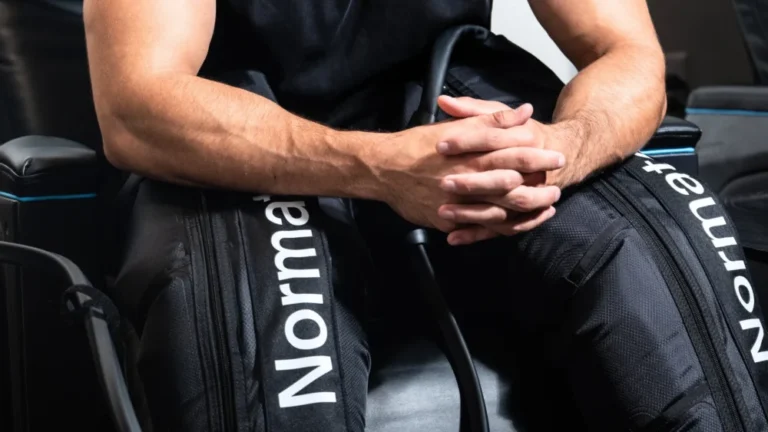
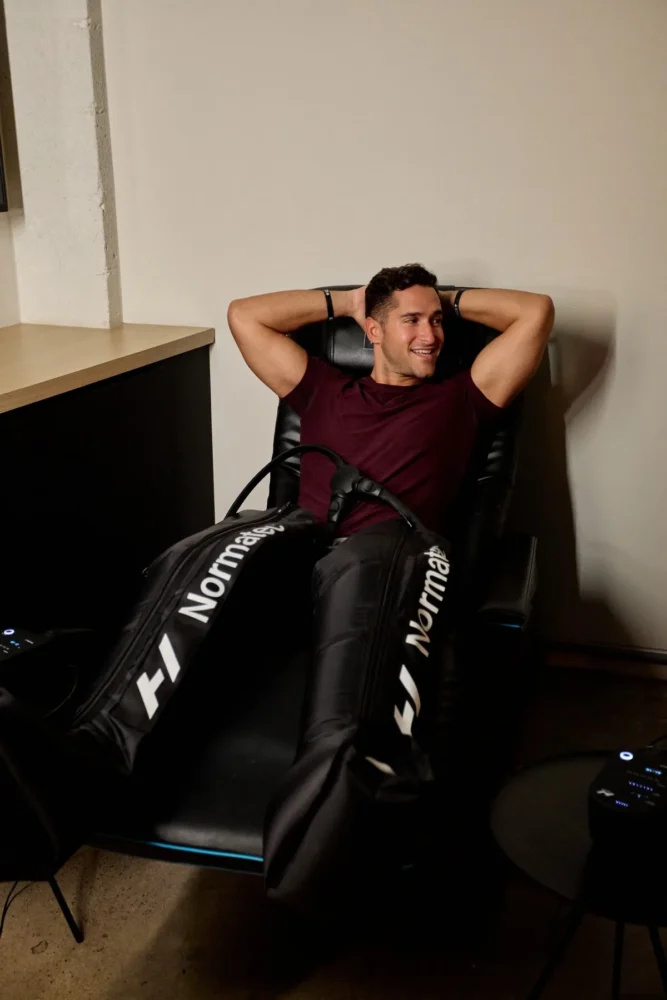
Compression boots treat the whole limb as one system, inflating in a timed sequence from the foot up toward the hip. There is no aiming involved, which makes them the choice for days when nothing in your legs hurts in particular and the whole leg feels heavy.
Percussion therapy: when to use a massage gun
Before training, spend 30 to 60 seconds per muscle group. Short bouts of percussion can improve short-term range of motion without the strength drop that long static stretching sometimes causes.
After training, use it on specific tight spots instead of as a full-body sweep. Remember to keep it moving and stay off bone and joints.
Normatec compression boots: benefits and when to use them
Compression earns its reputation after long or high-volume training sessions. A 2024 meta-analysis of 17 trials found intermittent pneumatic compression reduced muscle soreness, measured both in the first couple of hours after training and again several days later. That second window is the one that matters for your week: legs that feel better on day two give you a better session on day two!
Twenty to thirty minutes is the usual session. Longer is not better, and most members find the sweet spot is right after training or in the evening of a hard day.
How to choose
Ask one question: can you point at a specific sore spot? If you can, use the massage gun. If you cannot, and the whole leg feels heavy, use the compression boots. On a hard day, use both, starting with the massage gun on the specific spots and finishing with around twenty minutes in the boots.
Who should be cautious
Talk to your doctor before using compression boots or a massage gun if you have or have had blood clots, circulation problems, heart failure, or reduced feeling in your legs, or if you take blood thinners. Do not use either over a fresh injury, swelling, varicose veins, or broken skin.
FAQ
What’s the difference between a massage gun and compression boots?
A massage gun applies rapid percussion to one specific spot, which makes it a targeting tool. Compression boots apply timed air pressure along the entire limb, which makes them the choice when the whole leg feels heavy.
Do compression boots work?
Yes, for soreness. A 2024 meta-analysis of 17 randomized trials found consistent reductions in muscle soreness, measured both in the hours right after training and days later. The payoff shows up in your training: when your legs feel better on day two, the session you do on day two is better.
Is a massage gun better than a foam roller?
They do different jobs. A massage gun is faster and more targeted; a foam roller covers larger areas and lets you use body weight to control pressure. Most people end up using both.
When should you use compression boots?
After long or high-volume training, or in the evening of a hard day. Twenty to thirty minutes is typical.
Can you use a massage gun every day?
Yes, for most people, in short bouts on muscle rather than bone or joints. Stop if you feel sharp pain, numbness, or tingling, and avoid using it over a fresh injury, an area of swelling, or broken skin.
About this series: This article is part of the City Fitness Revive recovery series and is for educational purposes only. It is not medical advice and does not create a clinician-patient relationship. Revive services are not intended to diagnose, treat, cure, or prevent any disease or medical condition. Talk with your doctor or another qualified clinician before starting or changing a recovery routine, especially if you are pregnant, have any health condition, or take any medication.
Recovery treatments are not right for everyone. Heat, extreme cold, compression, percussion, supplemental oxygen, and light therapy can be unsafe for people with certain conditions. These include heart disease or high, low, or unstable blood pressure; blood clots, a history of DVT, or circulation problems such as Raynaud’s; respiratory conditions; conditions that reduce your ability to sense heat, cold, or pain, such as neuropathy; sensitivity to light or heat, or a medication that causes it; a history of skin cancer or an active skin lesion; use of blood thinners or a bleeding disorder; and open wounds, skin infections, illness, or a recent injury or surgery. If any of these apply to you, get your doctor’s approval first. Do not use Revive services after drinking alcohol or while dehydrated. Stop any session right away if you feel pain, dizziness, numbness, tingling, or otherwise unwell. Always follow posted instructions and Team Member guidance, including the required protective gear and eye protection.
Research described in this series summarizes average findings from published studies. Individual experiences vary, and session lengths and frequencies are general guidelines, not personal recommendations.
Sources
- Maia, F., Nakamura, F., Sarmento, H., Marcelino, R., & Ribeiro, J. (2024). Effects of lower-limb intermittent pneumatic compression on sports recovery: a systematic review and meta-analysis. Biology of Sport, 41(4), 263-275. doi.org/10.5114/biolsport.2024.133665